Brainviz: a portable, extensible 3D brain viewer
Brainviz is a portable, extensible 3D viewer for human brain structure in MNI space. It brings cortical parcellations, connectomes, and white-matter tract bundles into one scene, so relationships that are usually split across figures can be explored together.
One network, many layers
Start with the default mode network (DMN). The same focus is resolved on the cortex, structural connectome, and white-matter tracts: one selection, several complementary views of its anatomy.
Combine networks and functional sets
Selections stack. This scene combines the default mode network with a theory-of-mind localizer, then adds subcortical structures, cerebellum, and white-matter tractography. Their colours, strengths, visible layers, and camera are all part of the saved scene.
Export figures and motion
Exports are not limited to still images. This GIF records a rotating view of the default mode and frontoparietal control networks on the inflated cortex, ready to use in a paper, presentation, or shareable update.
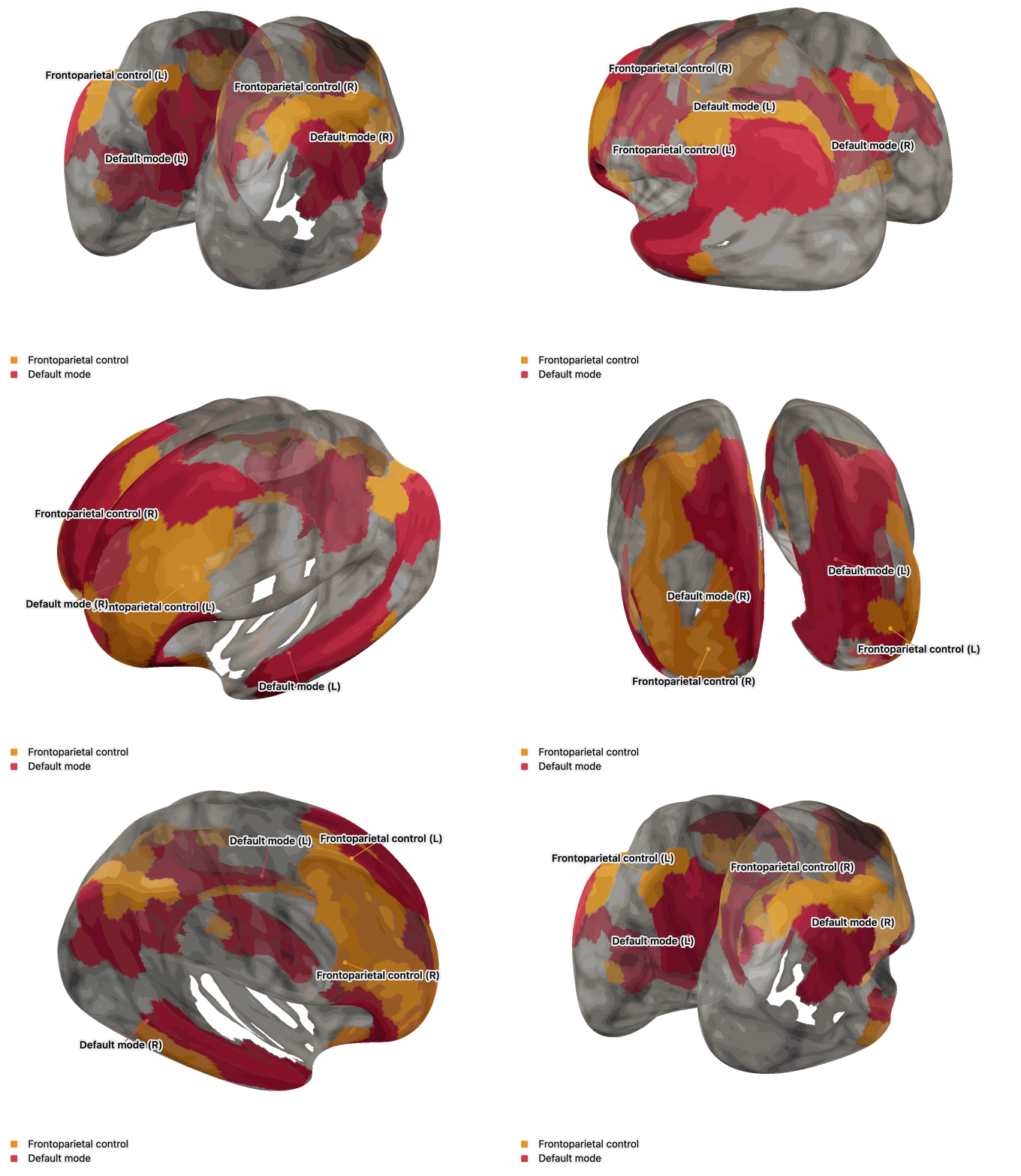
Brainviz also exports transparent, tightly cropped PNGs. The legend can be included so a figure remains interpretable outside the viewer.

Reference views
Left-lateral, anterior, and superior views give the larger oblique export an anatomical frame of reference.

Copy link records the complete scene: visible layers, focus regions, colours, display options, and camera position. The configuration is compressed and stored after #, so it stays client-side and needs no account or backend. Copy embed turns that same saved view into a clean iframe; readers can press z to reveal the controls.
More posts